Singapore F&B & Hospitality Accounting Specialists

GST, Bookkeeping and Accounts for Coffeeshops and Restaurants.

We help Singapore coffeeshops, eating houses, restaurants and caterers keep records that match how they actually trade, from daily cash takings, stall rents and recharges to service charge and BCRS deposits, so every quarterly GST return and set of annual accounts traces back to the document behind it.

F&B Accounting Isn’t Like Normal Accounting

Unlike a business that issues one invoice per customer, an F&B business earns its income in many small pieces. A coffeeshop operator may bill stallholders for rent and recharge them for utilities, cleaning and pest control, while ringing up hundreds of small sales a day at its own counter. A restaurant may add a service charge to dine-in bills, takes payments through a point-of-sale system and delivery platforms, and pays a steady stream of modest supplier invoices.

Each of those streams is recorded differently, yet for a GST-registered business every one has to be captured correctly in the same GST return, which is usually filed quarterly. Since 1 April 2026, the Beverage Container Return Scheme (BCRS) has added a 10-cent refundable deposit to pre-packaged drinks in plastic bottles and metal cans, which sits outside GST and has to be kept apart from the beverage itself. We set up records that follow how the business actually trades, so the GST return and the accounts can be traced back to the documents behind them.

That is where an accounting specialist for F&B businesses matters.

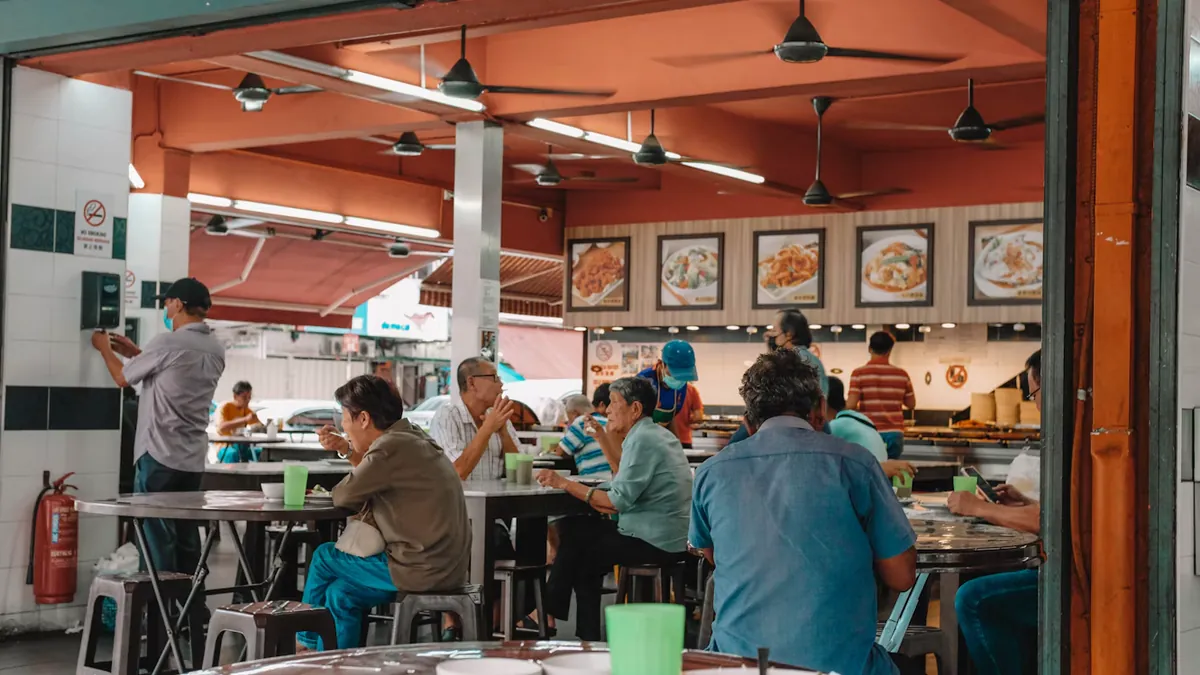
Diners at tables in a busy Singapore hawker centre
  • Income from several directions: counter takings, stall rents, utility recharges and catering

  • Mostly cash, small-ticket sales with no customer invoice, so GST is extracted from the gross

  • A steady stream of supplier bills, each to be checked for input tax and backed by a valid tax invoice

  • Rules at the till: service charge, GST-exclusive price displays and the BCRS deposit

  • ACRA registered filing agent badge

    Registered Filing Agent FA20020117

  • ISCA certified accountants badge

    Certified Accountants by ISCA

  • MOM collaboration partner badge

    Trusted Collaborations With MOM

  • IRAS collaboration partner badge

    Trusted Collaborations with IRAS

  • CPA Practice accreditation logo

    CWM is a CPA Practice

  • Accredited Tax Advisor (SCTP) badge

    Accredited Tax Advisor ATA0067

Specialised Accounting Services For
F&B & Hospitality Businesses

Developed from more than 50 years of supporting Singapore businesses, including coffeeshop operators, eating houses, restaurants and caterers.

GST Bookkeeping & F5 Filing

01

We keep sales registers for both invoiced and cash income, list purchases supplier by supplier, and prepare a quarterly GST account behind every F5 return.

  • Daily takings with GST extracted from the gross
  • Serially numbered stallholder and customer invoices
  • Quarterly GST F5 preparation and filing

POS & Xero Setup

02

We set up Xero so daily point-of-sale summaries, service charge, BCRS deposits and delivery platform payouts each post to the right account with the right GST treatment.

  • POS daily summaries posted to Xero
  • Service charge taxed, BCRS deposits kept outside GST
  • Delivery platform payouts and fees reconciled

Payroll, CPF & AIS

03

We maintain monthly salary and CPF records and, where your business is on the Auto-Inclusion Scheme (compulsory with five or more employees), submit employment income under it, reconciled to any labour you recharge.

  • Monthly payroll and CPF records
  • Auto-Inclusion Scheme (AIS) submissions
  • Labour recharges reconciled to payroll

Annual Accounts & Tax

04

We prepare the annual accounts and corporate tax return from the same books that support your GST returns.

  • Profit and loss account and balance sheet
  • Fixed assets and capital allowances
  • Annual filings with our corporate secretarial team

GST at the F&B Counter: Service Charge and the BCRS Deposit

Two items appear on F&B bills that most other businesses never deal with. A service charge is part of the price of the meal, so GST is charged on it. A BCRS deposit is a refundable amount paid on top of the price of a drink, so GST is not charged on it. Both need to be set up correctly in your point-of-sale system and your books.

Service charge is part of the price

Under IRAS’s guidance for hotels and F&B, a GST-registered business charges GST on the food and the service charge together:

Food & beverageS$100.00
10% service chargeS$10.00
9% GST on S$110.00S$9.90

Where a genuine service charge is imposed, prices may be displayed before GST, provided a prominent statement such as “Prices are subject to GST and service charge” is shown. Outlets without a service charge, or with a nominal one levied only to avoid GST-inclusive pricing, must display GST-inclusive prices.

The BCRS deposit sits outside GST

From 1 April 2026, a 10-cent refundable deposit applies to each regulated beverage: pre-packaged drinks in plastic or metal containers of 150 millilitres to 3 litres carrying the BCRS Deposit Mark. Glass bottles, cartons and drinks freshly prepared on the premises are excluded. Under IRAS’s guidance on the BCRS deposit:

  • The deposit is not subject to GST; the beverage still is
  • A S$2.00 drink (GST-inclusive) plus a S$0.10 deposit carries GST of S$0.17 (9/109 × S$2.00)
  • The deposit should be shown separately on invoices and receipts
  • On purchases, it stays out of both the taxable value and the input tax claim

Separately, dine-in outlets in NEA’s Return Right F&B Scheme collect containers back and do not charge diners the deposit.

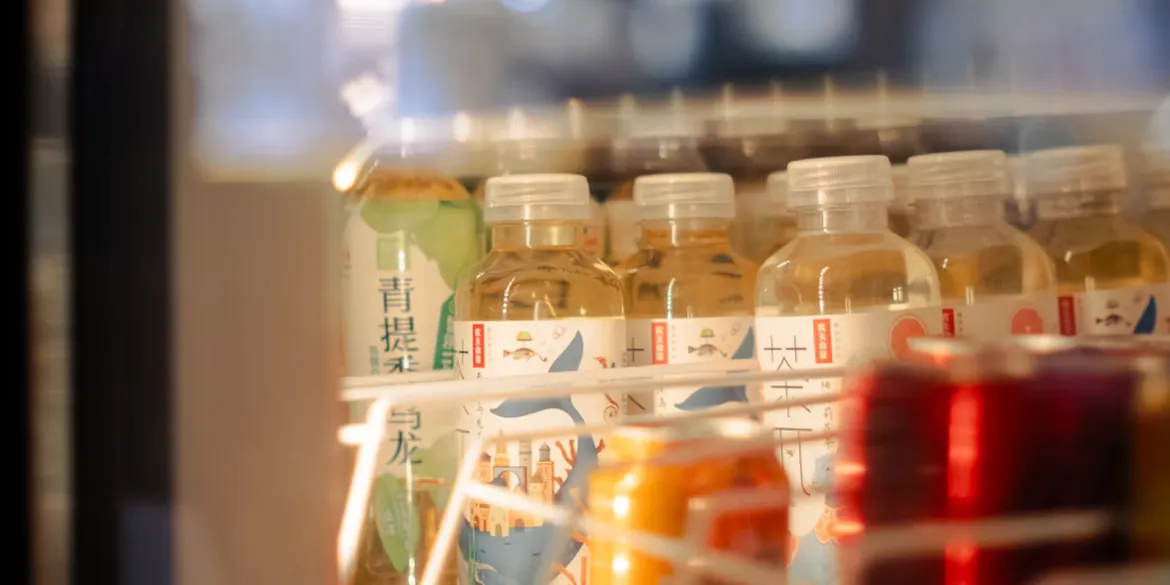
Canned and bottled drinks in a chiller, subject to the BCRS deposit

GST for Coffeeshop Operators: Stall Rent, Recharges and Cash Takings

A coffeeshop or eating house operator earns income from several directions at once. For a GST-registered operator, every stream is standard-rated, but the GST is worked out and recorded differently for each.

Stall rent and recharges

Rent, utility recharges, refuse disposal, cleaning and pest control are billed to each stallholder on a serially numbered monthly invoice, with GST charged at 9%. Labour the operator supplies to the stalls is invoiced the same way and reconciled to payroll.

Cash takings at the counter

Counter prices are GST-inclusive and usually set in round dollars, so the GST is 9/109 of the takings and is extracted day by day. S$109 of takings, for example, includes S$9 of GST.

Supplier bills and input tax

Each supplier invoice is listed by date, number, net amount, GST and total, so every input tax claim traces back to a valid tax invoice. On beverage purchases, the BCRS deposit stays out of both the taxable value and the input tax claim.

How Have We Helped F&B Businesses?

A real engagement with a Singapore coffeeshop operator: The GST bookkeeping we built around how it trades, the BCRS deposit from April 2026, and the GST F5 returns and accounts drawn from one set of books.

L W Eating House

Teck Whye Lane, Singapore

Case Study 01

Case Study | Hospitality (Coffeeshop & Food Services)

GST Bookkeeping and Record-Keeping for an Eating House

L W Eating House • Teck Whye Lane, Singapore

Client
L W Eating House
Industry
Coffeeshop and eating house operator
Engagement
GST bookkeeping, payroll and annual accounts
Reporting
Quarterly GST F5 returns

The Background

L W Eating House operates a coffeeshop at Teck Whye Lane, Singapore. It lets stalls to hawker tenants, runs the drinks counter itself and employs the service team working across the premises. Like most eating houses in Singapore, it is GST-registered and files a GST F5 return every quarter.

The business is busy, small-ticket and almost entirely cash at the counter, and its records must support a GST return every quarter and a set of annual accounts every year.

The Challenge

An eating house does not have one revenue stream. In a single month the operator bills each stallholder for coffeeshop stall rent, recharges electricity and water, refuse disposal, exhaust duct cleaning and pest control, invoices the labour it supplies to the stalls, and rings up cash sales at its own drinks counter every day.

Every one of these is a standard-rated supply, but each is recorded in a different way. The invoiced items need a serially numbered document for each stallholder every month. The counter takings have no customer invoice at all, because prices are set in round dollars, so the GST has to be extracted from the gross takings day by day.

From 1 April 2026, the Beverage Container Return Scheme (BCRS) added a 10-cent deposit on each regulated beverage container. The deposit is not subject to GST; the beverage still is. For a coffeeshop buying in drinks every week, the deposit now appears on almost every beverage invoice, and if it is absorbed into the purchase value, input tax is over-claimed.

Our Approach

A sales record built around how the income actually arises.

01

We maintain two registers. The first holds serially numbered monthly invoices to stallholders for rent, utility recharges, refuse, cleaning, pest control and labour supply. The second is a daily takings sheet for the drinks counter, with GST extracted from the gross.

Purchases listed supplier by supplier.

02

Each supplier invoice is recorded by date, number, net amount, GST and total, so every GST input tax claim traces back to a supplier’s tax invoice, not a bank entry.

BCRS deposits separated from the quarter the scheme began.

03

A dedicated deposit column was added to the purchase records from the April to June 2026 quarter, keeping the BCRS deposit out of both the taxable purchase value and the input tax claim.

A quarterly GST account behind every F5 return.

04

Output tax from both sales registers and input tax from the purchase listing are brought together each quarter, giving the figure filed on the GST F5 return and the record behind it.

Payroll, CPF and AIS.

05

We maintain monthly salary and CPF records and submit employment income to IRAS under the Auto-Inclusion Scheme (AIS). Because the labour is recharged to the stalls, payroll and the sales record reconcile.

Annual accounts, capital allowances and tax.

06

The trading and profit and loss account, balance sheet, fixed assets and capital allowances are prepared from the same records that support the GST returns.

The Outcome

  • A sales record capturing every standard-rated income stream, invoiced and cash

  • GST input tax claims that trace to a valid supplier tax invoice

  • BCRS deposits tracked separately from the quarter the scheme started

  • Quarterly GST F5 returns and annual accounts drawn from one consistent set of records

Every figure in the GST return, the payroll and the annual accounts can be traced back to the document behind it.

Don't Just Take Our Word For It

Five decades of relationships, in our clients' own words.

What This Means for Other Coffeeshops and F&B Operators

A GST-registered food business must keep proper records, and in this trade that is harder than it sounds. Income arrives in small amounts from several directions, much of it in cash without an invoice, while purchases come in as a steady stream of modest supplier bills. Records built for a business that issues one invoice per customer do not fit.

CWM has supported Singapore businesses for over 50 years. We are a CPA practice, an Accredited Tax Advisor (ATA0067) and an ACRA-registered filing agent (FA20020117). For coffeeshops, eating houses, hawker stall operators, restaurants and caterers, we set up GST bookkeeping that matches how the business actually trades, keep the quarterly GST returns on time, and prepare the annual accounts from the same books.

F&B Accounting FAQs

Do restaurants in Singapore charge GST on service charge?

Yes. For a GST-registered F&B business, the service charge forms part of the price of the meal, so GST is charged on the food and the service charge together. On a S$100 bill with a 10% service charge, GST at 9% is calculated on S$110, giving S$9.90.

Is the BCRS beverage deposit subject to GST?

No. Since 1 April 2026, a 10-cent refundable deposit applies to each regulated beverage: a pre-packaged drink in a plastic or metal container of 150 millilitres to 3 litres carrying the BCRS Deposit Mark. Glass bottles, cartons and drinks freshly prepared on the premises are not covered. IRAS does not charge GST on the deposit because it is refundable and paid over and above the price of the beverage. GST is still charged on the beverage itself, and on purchases the deposit should be kept out of both the taxable value and the input tax claim. Dine-in outlets in NEA's Return Right F&B Scheme collect containers back and do not charge diners the deposit.

How does a coffeeshop account for GST on cash sales without invoices?

For a GST-registered business, counter sales at GST-inclusive, round-dollar prices are still standard-rated supplies. The GST is extracted from the gross takings at 9/109 and recorded day by day, usually from a daily takings sheet or the point-of-sale end-of-day report. S$109 of takings, for example, includes S$9 of GST. Those daily records, alongside the invoices issued to stallholders and other customers, form the sales side of the quarterly GST F5 return.

When does an F&B business need to register for GST?

There are two tests. Under the retrospective test, a business whose taxable turnover is more than S$1 million for a calendar year must apply to register by 30 January of the following year. Under the prospective test, a business that can reasonably expect taxable turnover of more than S$1 million in the next 12 months must apply within 30 days of that forecast. IRAS sets out some exceptions and the date registration takes effect.

Can restaurants display prices without GST?

GST-registered businesses generally have to display GST-inclusive prices. IRAS makes an exception for F&B establishments that impose a genuine service charge: they may display prices before GST, provided a prominent statement such as “Prices are subject to GST and service charge” is shown. The exception does not apply to outlets that do not impose a service charge, or that levy a nominal one only to avoid GST-inclusive pricing, and items sold only for takeaway or delivery with no service charge must be priced GST-inclusive.

What records does a GST-registered eating house need to keep?

Sales records for every standard-rated stream, such as daily counter takings and invoices to stallholders for rent and recharges, valid tax invoices from suppliers to support each input tax claim, the quarterly GST account behind each F5 return, and payroll and CPF records. Business records generally have to be kept for at least five years.

Is GST charged on stall rent and utility recharges to stallholders?

Yes, where the coffeeshop operator is GST-registered. Stall rent, utility recharges, refuse disposal, cleaning, pest control and labour supplied to the stalls are all standard-rated supplies, invoiced to each stallholder on a serially numbered invoice every month.

What do I need to claim GST input tax on supplier bills?

Generally, a valid tax invoice from the supplier addressed to your business, together with IRAS’s other conditions for claiming input tax. For purchases of S$1,000 or less including GST, the supplier may issue a simplified tax invoice.

Does an eating house need to submit employee income under AIS?

Employers with five or more employees must register for the Auto-Inclusion Scheme (AIS) and submit their employees’ employment income to IRAS by 1 March each year. We prepare the AIS submission from the same payroll and CPF records that reconcile to any labour recharged to the stalls.

Do you work with restaurants and caterers as well as coffeeshops?

Yes. We support coffeeshop and eating house operators, restaurants, caterers and other food and beverage businesses in Singapore with GST bookkeeping and filing, Xero setup, payroll and CPF, and annual accounts and tax.

Unlock Comprehensive Corporate Services.
Make An Appointment With Us!

Whether you need help with incorporation, accounting, tax, payroll or corporate compliance, our team is here to help. Fill in the form below and we will get back to you as soon as possible.

Book An Appointment

Have A Question?
Reach Out To Us

Contact Us